
Portugal Heritage Tourism Market Size

Portugal Heritage Tourism Market Trends
The Portugal heritage tourism market size was estimated at USD 1.05 billion in 2024 and is expected to grow at a CAGR of 15.5% from 2025 to 2033. Portugal’s heritage tourism sector is gaining momentum as travelers show strong interest in destinations that combine cultural depth with natural landscapes. Visitors are increasingly drawn to Portugal’s varied heritage assets, ranging from prehistoric rock art sites and medieval fortresses to the distinctive Manueline architecture tied to the Age of Discoveries. At the same time, there is a growing demand for sustainable and responsible tourism, with consumers seeking experiences that contribute to heritage preservation and deliver local economic benefits.
In 2024, Portugal’s tourism boards and specialized travel platforms recorded a notable surge in demand for experiences that blend heritage with thematic storytelling and sensory immersion. For instance, Turismo de Portugal highlighted that spending on heritage and cultural routes grew by around 26% above pre‑pandemic levels by mid-2024, outpacing other leisure travel segments like shopping or nightlife. Meanwhile, data from Turismo do Porto e Norte and travel technology providers revealed that visitors to Portugal increasingly opt for multi-stop itineraries, averaging over three heritage-focused excursions per trip in 2023, up from roughly 1.9 in 2019. This reflects how travelers structure their visits around carefully curated journeys, such as wine heritage trails in the Douro Valley, monastic architecture circuits, and explorations of medieval Jewish quarters.
In addition, tourism stakeholders have developed diverse programs to spotlight Portugal’s lesser-known regions and their distinct heritage. Initiatives such as the “Rotas Culturais” promote thematic travel along historic routes, including the Roman roads of Lusitania, trails associated with maritime discoveries, and routes celebrating the Portuguese Diaspora’s global cultural influence. One example is the “Portuguese Jewish Heritage Route,” connecting synagogues, Jewish quarters, and museums in cities like Belmonte, Tomar, and Lisbon. These offerings tap into a growing appetite for immersive heritage experiences intertwined with Portugal’s rich storytelling traditions.
Urban heritage tourism is also evolving across Portugal’s cities. Tourism strategies have increasingly positioned historical districts as lively cultural quarters in places like Braga, Coimbra, and Faro. Operators design tours interlacing historical facts with music, cuisine, and local craft. For instance, urban heritage walks include organ concerts in baroque cathedrals, hands-on workshops in azulejo tile painting, or tasting sessions of regional convent sweets linked to centuries-old monastic recipes. This evolution mirrors the strong resurgence of Portugal’s domestic and inbound travel sector, which surpassed 28 million tourist arrivals in 2024, the highest level since the pre-2019 period, with pronounced peaks during major festivals and religious holidays.
Moreover, national and regional authorities have intensified investments in heritage preservation, recognizing the economic and social impact of well-maintained cultural assets. Under the European-funded Recovery and Resilience Plan (PRR), Portugal has committed more than USD 318.7 million between 2021 and 2026 to safeguard and restore cultural heritage. This program has supported over 190 projects, from revitalizing medieval castles and convents to infrastructure improvements in traditional villages. These heritage investments have bolstered local economies, sustaining thousands of jobs and contributing roughly USD 516.6 million annually to tourism-driven economic activity across Portugal’s regions.
Consumer Insights
Tourists are increasingly motivated by authentic cultural experiences, preferring immersive encounters with Portugal’s historical landmarks, traditional gastronomy, and regional customs. This shift reflects a broader trend in which modern travelers seek more than just sightseeing; they desire a connection with the stories and significance behind each destination. Younger generations, especially Millennials and Gen Z, are driving this change by prioritizing personalized travel, often curated around themes such as architectural heritage, folklore, and artisanal craftsmanship.
Portugal’s tourism industry has diversified its tour offerings to meet these evolving expectations. There has been a rise in thematic guided tours, such as medieval village trails, Fado music experiences in Lisbon, and exploration of UNESCO World Heritage Sites like Sintra and Évora. Moreover, local tourism boards and private operators emphasize small-group tours and community-led activities for deeper cultural engagement. This strategic focus caters to consumer demand for authenticity and encourages sustainable travel practices by distributing tourism benefits evenly across rural and urban regions.
Visitors are becoming more mindful of their environmental and social impact, seeking heritage experiences, prioritizing conservation, and community benefits. As a result, there’s a growing demand for eco-certified heritage sites, restoration projects funded by tourism revenues, and initiatives that preserve traditional crafts and local knowledge. Tour operators are responding with programs highlighting sustainable practices, such as walking tours that minimize carbon footprints or partnerships with local artisans and family-run businesses. This alignment between sustainability and heritage appeals to ethically conscious travelers and ensures the long-term protection of Portugal’s cultural assets.

Modern travelers, particularly younger generations, are drawn to immersive activities that allow them to engage directly with Portuguese history, traditions, and local life. Instead of passive sightseeing, visitors want to participate in experiences like traditional tile-making workshops in Lisbon, Fado music sessions, or guided storytelling walks through historic neighborhoods. To cater to this demand, tour operators and cultural institutions offer smaller, themed group tours and interactive experiences emphasizing genuine local connections and hidden cultural gems, delivering a more personal and memorable journey.
Tourists are increasingly making choices that reflect concern for the environment and local communities, favoring businesses that practice conservation and promote cultural preservation. In response, Portugal’s tourism sector is adapting with eco-friendly heritage tours, initiatives to protect historic sites, and collaborations with local artisans and small businesses to ensure tourism revenue benefits communities directly. Such offerings appeal to travelers who wish to explore cultural heritage while leaving a positive impact, blending meaningful experiences with ethical considerations.
Type Insights
Cultural heritage tourism accounted for a revenue share of 55.25% in 2024. Younger generations in Portugal and European travelers have increasingly sought authentic experiences that connect them with local history, arts, and customs, fueling demand for museums, UNESCO-listed sites, and cultural festivals. This segment also benefits from higher visitor spending, as cultural tourists invest more in guided tours, artisan products, and local gastronomy to deepen their cultural immersion. Portugal’s strategic promotion of its cultural assets through digital platforms, heritage preservation initiatives, and partnerships with tour operators has further boosted cultural heritage tourism’s appeal and revenue contribution.
Natural heritage tourism is projected to grow at a CAGR of 16.9% from 2025 to 2033, driven by sustainability-conscious travelers increasingly seeking immersive experiences in the country’s diverse natural landscapes. Portugal’s efforts to promote its lesser-known natural sites digitally, such as through Turismo de Portugal’s “VisitPortugal” platform and social media campaigns highlighting hidden gems like the Serra da Lousã mountains and the Alvão Natural Park, have successfully broadened its visitor base. For instance, in March 2025, Portugal News reported a surge in international interest after viral Instagram reels and YouTube travel vlogs featured remote Portuguese natural spots, leading to a measurable increase in bookings for guided eco-tours in these regions.
Age Group Insights
Travelers between the age group of 31 to 50 held a revenue share of 40.73% in 2024. These travelers are particularly drawn to Portugal’s UNESCO World Heritage cities like Porto and Évora, medieval castles, and historic neighborhoods such as Alfama in Lisbon, where they can immerse themselves in architecture, art, and local traditions. Unlike younger tourists who often seek flexible, spontaneous trips, this demographic favors curated walking tours, guided museum visits, and organized cultural itineraries that bring Portugal’s rich maritime history and centuries-old heritage to life. Many are motivated by lifelong learning, family roots in Portuguese ancestry, or a love for art and history. The rising popularity of heritage-focused river cruises along the Douro, luxury rail experiences like the Presidential Train, and motorcoach tours through the Alentejo countryside cater perfectly to their desire for comfort and structured exploration.
The demand for heritage tours for travelers aged under 30 is expected to grow at a CAGR of 15.5% from 2025 to 2033. In Portugal, younger travelers are increasingly captivated by vibrant historical quarters like Lisbon’s Mouraria, street art tours exploring urban heritage, and interactive museum exhibits that make history engaging and shareable. Rising disposable incomes and interest in heritage-based travel as part of educational trips or family vacations further bolster this trend. Moreover, Portugal’s innovative use of digital storytelling, such as virtual reconstructions of historical sites and immersive mobile apps, has significantly amplified the visibility of its cultural heritage among younger audiences.
Booking Channel Insights
The direct bookings accounted for a market share of 40.65% in 2024. Many heritage sites, like the Torre de Belém and Palácio da Bolsa, now offer official websites and mobile apps for e-ticketing, exclusive guided tours, and event reservations, making it easy for visitors to plan directly. Turismo de Portugal has also centralized official booking links on the “VisitPortugal” platform, encouraging travelers to bypass intermediaries. This shift reflects growing digital habits and a desire to support heritage preservation by booking straight with local institutions.
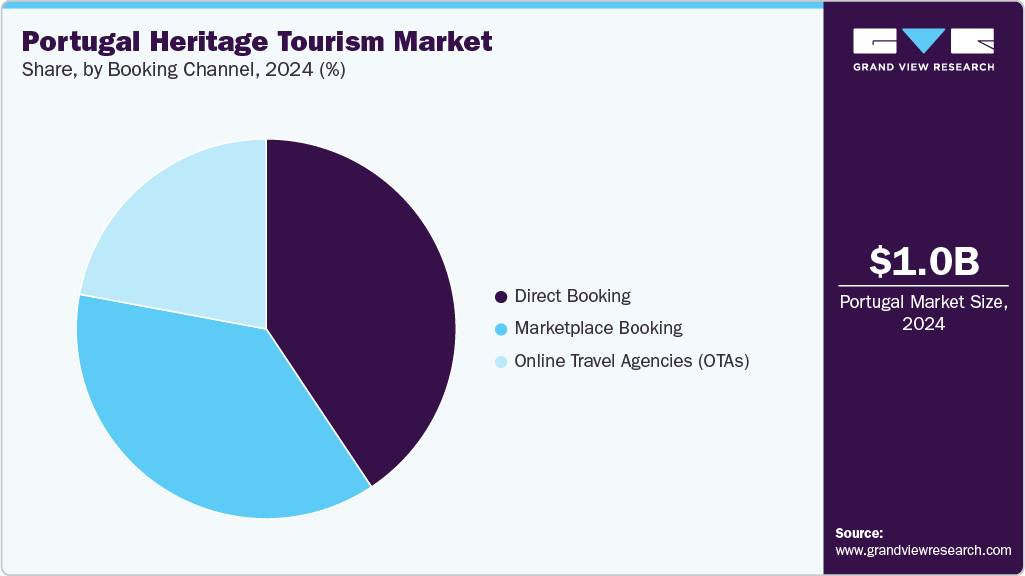
Marketplace bookings in the Portugal heritage tourism industry are expected to grow at a CAGR of 15.7% from 2025 to 2033, driven by the convenience and customization these platforms offer. Digital marketplaces like GetYourGuide, Tiqets, and Viator have made it easier for both international and domestic travelers to explore and book access to sites such as the Jerónimos Monastery, Palácio da Bolsa, and the Alcobaça Monastery in just a few clicks. These platforms offer real-time availability, verified user reviews, and curated cultural packages that bundle walking tours, museum visits, and skip-the-line entries, features especially appealing to tech-savvy and mobile-first users.
Key Portugal Heritage Tourism Company Insights
Portugal’s heritage tourism industry is fueled by a dynamic mix of established tour operators and emerging boutique firms, all working to showcase the nation’s deep cultural roots and diverse historical sites. Companies prioritize authentic experiences, whether through guided explorations of Porto’s Ribeira district, immersive Fado music evenings in Lisbon, or visits to lesser-known medieval villages. Partnerships with local municipalities, cultural foundations, and UNESCO heritage managers help expand offerings and ensure accurate, engaging storytelling. The sector is also rapidly adopting technology, offering features like mobile ticketing for sites such as Pena Palace, augmented reality tours in historic neighborhoods, and online platforms highlighting unique cultural routes. Sustainability and community impact are increasingly central, with operators focused on reducing tourist pressure on popular spots and channeling visitors toward hidden gems, thus supporting local economies. This combination of heritage stewardship, digital progress, and social consciousness positions Portugal’s heritage tourism industry to meet the growing travel demand that is both meaningful and responsible.
Key Portugal Heritage Tourism Companies:
- Trafalgar Tours
- Tauck, Inc. (Tauck World Discovery)
- Intrepid Travel, Inc.
- Globus Family of Brands (including Globus and Cosmos)
- Heritage Travel Services
- BLHeritage-Tours
- Viator, Inc.
- Tours For You
- G Adventures
- The Cooltours
Recent Developments
-
In June 2025, Newmarket Holidays unveiled its 2025-2027 global tour collection, adding ten exciting new escorted itineraries and offering up to 15% discounts on over 120 select trips booked by July 31, 2025. The expanded line‑up features New Zealand, debuting a 21‑day North and South Island journey alongside new European tours across Portugal’s Douro Valley, Slovenia, Croatia, and Italy. Highlights include European highlights like Istrian-style voyages through Slovenia, Croatia, and Italy, plus innovative routes offering cultural immersion and natural beauty. The brochure launch is supported by a summer-long TV campaign, reinforcing its narrative of expert-led, value‑driven travel designed for both agents and holidaymakers.
-
In March 2025, Portugal advanced its cultural tourism and heritage preservation strategy by introducing innovative digitalization initiatives leveraging Augmented Reality (AR) and Virtual Reality (VR) technologies. This initiative was led by the CCG/ZGDV Institute – Centre of Computer Graphics (Centro de Computação Gráfica), a prominent Portuguese research and technology organization specialising in immersive technologies, digital heritage, and smart tourism solutions.
Portugal Heritage Tourism Market Report Scope
|
Report Attribute
|
Details
|
|
Market size value in 2025
|
USD 1.21 billion
|
|
Revenue forecast in 2033
|
USD 3.82 billion
|
|
Growth rate
|
CAGR of 15.5% from 2025 to 2033
|
|
Actual data
|
2021 – 2024
|
|
Forecast period
|
2025 – 2033
|
|
Quantitative units
|
Revenue in USD million/billion and CAGR from 2025 to 2033
|
|
Report coverage
|
Revenue forecast, company ranking, competitive landscape, growth factors, and trends
|
|
Segments covered
|
Type, age group, booking channel
|
|
Country scope
|
Portugal
|
|
Key companies profiled
|
Trafalgar Tours; Tauck, Inc. (Tauck World Discovery); Intrepid Travel, Inc.; Globus Family of Brands (including Globus and Cosmos); Heritage Travel Services; BLHeritage-Tours; Viator, Inc.; Tours For You; G Adventures; The Cooltours
|
|
Customization scope
|
Free report customization (equivalent up to 8 analysts working days) with purchase. Addition or alteration to country, regional & segment scope.
|
|
Pricing and purchase options
|
Avail customized purchase options to meet your exact research needs. Explore purchase options
|
Portugal Heritage Tourism Market Report Segmentation
This report forecasts revenue growth at country levels and provides an analysis of the latest trends and opportunities in each of the sub-segments from 2021 to 2033. For this study, Grand View Research has segmented the Portugal heritage tourism market based on type, age group, and booking channel:
-
Type Outlook (Revenue, USD Billion, 2021 – 2033)
-
Cultural Heritage
-
Natural Heritage
-
Intangible Heritage
-
-
Age Group Outlook (Revenue, USD Billion, 2021 – 2033)
-
30 and Under
-
31 to 50
-
51 to 70
-
71 and Above
-
-
Booking Channel Outlook (Revenue, USD Billion, 2021 – 2033)
Frequently Asked Questions About This Report
b. The Portugal heritage tourism market was estimated at USD 1.05 billion in 2024 and is expected to reach USD 1.21 billion in 2025.
b. The Portugal heritage tourism market is expected to grow at a compound annual growth rate of 15.5 from 2025 to 2030 to reach USD 3.82 billion by 2033.
b. Cultural heritage tourism accounted for a revenue share of 55.25% in the year 2024, driven by increased public interest in exploring historic sites, cultural landmarks, and traditional practices.
b. Some of the key players operating in the Portugal heritage tourism market include Trafalgar Tours, Tauck, Inc. (Tauck World Discovery), Intrepid Travel, Inc., Globus Family of Brands (including Globus and Cosmos), Heritage Travel Services, BLHeritage-Tours, Viator, Inc., Tours For You, G Adventures, The Cooltours
b. Growth of the Portugal heritage tourism market is primarily driven by its rich blend of historic sites, charming old towns, and unique cultural traditions that attract culturally curious travelers. Government efforts to restore landmarks and promote cultural festivals further boost interest and visitor numbers.
link




:max_bytes(150000):strip_icc()/120325-oprah-soc-860665f9054143eeb0dd846dc28fa740.jpg "Oprah-Approved Clothes, Shoes, and Bags Start at on Amazon")
