
One Million Health Tourists in Iran

WANA (Oct 13) – The Director General of Domestic Tourism at Iran’s Ministry of Cultural Heritage, Tourism, and Handicrafts announced that around one million health tourists entered Iran last year. These visitors came to the country seeking medical treatments, wellness services, and healthcare.
Mostafa Fatemi described health tourism as one of Iran’s major economic assets, emphasizing that this sector could play a significant role in the country’s economic future. Referring to regional challenges amid ongoing conflicts, he said: “We are working to introduce Iran’s cities and attractions and to counter the media-driven Iranophobia. In essence, the mission of tourism is to showcase the country’s cultural, historical, and natural capacities so that the real face of Iran becomes visible to the world.”
According to Fatemi, the Ministry has compiled a list of about 100 key challenges facing urban tourism. These issues are categorized under themes such as transportation, marketing, administration, education, tourism product diversity, and financial management — with specific plans being developed for each area.

Iran Plans to Boost Health Tourism
WANA (Feb 12) – Iran is setting its sights on a major expansion in health tourism, with plans to generate €6 billion in revenue as part of the country’s Seventh Development Plan, according to Jalal Ghafarzadeh, The Head of the Supervision and Accreditation Center for Medical Affairs at the Ministry of Health. Speaking at […]
Highlighting the importance of the private sector, Fatemi stated that tourism development is impossible without the active participation of private stakeholders. He noted that part of the Ministry’s authority has already been delegated to them. In the field of transportation, he added, efforts are underway to design travel routes that allow tourists to reach their destinations without relying on private vehicles.
Fatemi outlined several priorities on the Ministry’s agenda: strengthening tourism diplomacy, promoting Iran’s diverse attractions, redesigning geographical target markets, maximizing the potential of religious and health tourism, facilitating land border crossings, rebuilding market confidence, and organizing familiarization tours for foreign professionals. Strengthening cooperation between Iranian and international private-sector partners is also a key objective.
He noted that Iran ranks among the world’s top ten countries in terms of historical monuments, adding that with greater support, the country could make significant progress both in the preservation of heritage sites and in presenting them to international visitors.
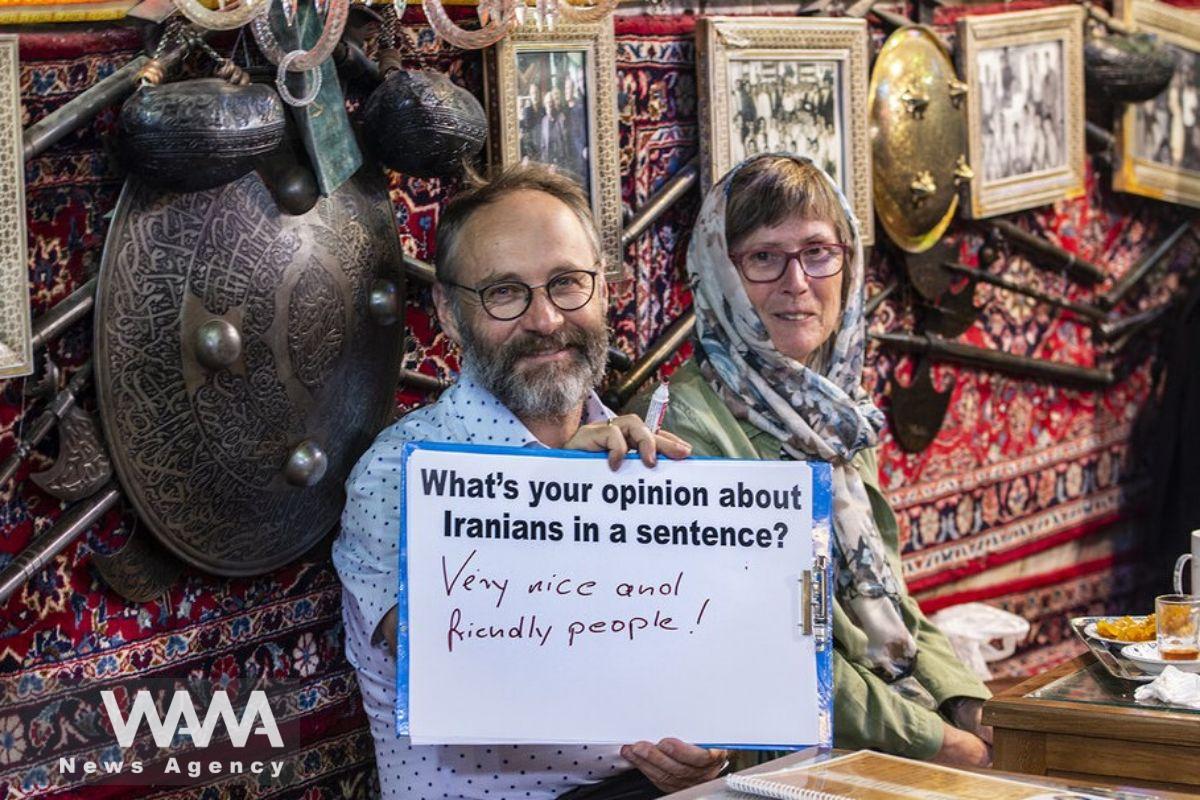
Tourists expressing their ideas about travelling to Iran/Photo By Behnam Yousefi/Social media/ WANA (West Asia News Agency)
Referring to Iran’s religious tourism potential, Fatemi said this sector has always been active. The city of Mashhad remains one of the main destinations for pilgrims from various countries — particularly Iraq, Afghanistan, and other regional states. He added that this flow of visitors continued even during times of restriction and plays a significant role in the tourism economy.
The tourism official also announced the revival of cruise operations in Iran’s northern and southern waters, noting that part of the docking and licensing barriers has been removed. These ships are expected to be used for sea tours and tourism festivals.
Discussing rural tourism, Fatemi mentioned that Iran is participating this year in the global “Best Tourism Villages” competition with eight villages, including Muil in Ardabil, Palangan in Kurdistan, and Kandolus in Gilan. Previously, the villages of Kandovan and Esfahak had already earned global recognition. Fatemi stressed that promoting Iranian villages on the world stage not only attracts more tourists but also helps preserve local cultures and boost rural economies.

How Iran Plans to Attract Five Million Iraqi Tourists
WANA (Oct 11) – Iran aims to increase the number of Iraqi tourists visiting the country to five million annually within the next three years — a target set under a new memorandum of understanding signed between the private sectors of both countries. According to the latest figures from Iran’s Ministry of Cultural Heritage, Tourism, […]
link




:max_bytes(150000):strip_icc()/120325-oprah-soc-860665f9054143eeb0dd846dc28fa740.jpg "Oprah-Approved Clothes, Shoes, and Bags Start at on Amazon")
