
Leveraging deep learning for destination image visualization to measure chromatic prominence in heritage tourism
Color analysis
Figures 3 and 4 present the scatter points for all colors and the five color clusters within each study area. Figure 3 demonstrates the prevalence of red hues in JGS, LM, and LSC. Figure 4 shows that JGS, NCU, LM, and CYC exhibit analogous patterns, with dark gray comprising the predominant frequency and black occupying the second or third position. Conversely, 731 has the highest frequency of black clusters, followed by dark gray; NJM resembles 731, except that light gray ranks second. 918 possesses the fourth frequency of the black cluster and the largest light gray cluster. LSC displays a markedly different pattern, featuring the fifth frequency of the blue cluster and the third frequency of the grayish-white cluster.

a NCU. b JGS. c 918. d LM. e NJM. f 731. g LSC. h CYC.
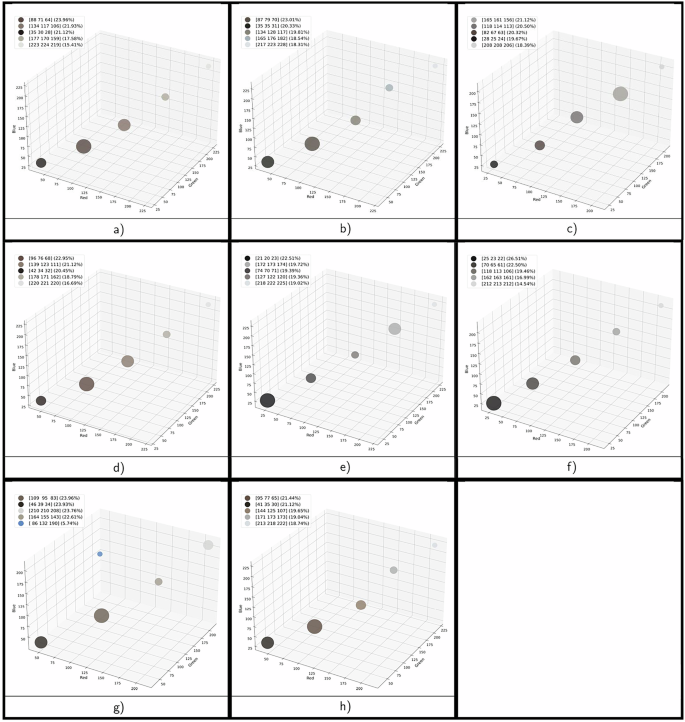
a NCU. b JGS. c 918. d LM. e NJM. f 731. g LSC. h CYC.
Figure 5 presents several examples from the data set. Specifically, 731 has the highest frequency (26.51%) of the black cluster across eight sites, giving solemnity and a sense of historical weight that represents the darkness and gravity of history. The light gray and gray hues represent 918’s acquisition of wisdom from historical suffering and its progression toward a future characterized by peace and growth. The blue and grayish-white clusters indicate that travelers are enthusiastic about photographing the external environment, including architectural structures and natural landscapes, during their visit to LSC. These warm hues promote a sense of optimism for the tranquility and revitalization linked to victory in combat. In summary, these color combinations not only embody the architectural and natural attributes of the memorials but also significantly influence visitors’ perceptions and emotional experiences.

a 731. b 731. c 731. d 918. e 918. f 918. g LSC. h LSC. i LSC.
Object detection
The top 20 objects for each site are reported in Table 1, together with the word cloud distribution shown in Fig. 6. The objects with a higher amount, apart from those commonly appearing in memorials (e.g., statues, museums, monuments, etc.), are noteworthy. The salient feature of NCU was the armed uprising since travelers highlighted the details (i.e., military uniforms and shotguns) and bronze sculptures portraying the heroes. The tourist perceptions of JGS emphasize ecological revolution: natural landscape (e.g., hill, mountain, vegetation, forest, and watercourse) accounted for a revolutionary site with the surrounding environment. 918 features concrete, winter, snow, and freezing, echoing the cold climate in which the incident occurred and the sense of historical heaviness. LM emphasizes columns, hardwood, and Chinese architecture, focusing on the historical restoration of the old conference and the historical authenticity of interior displays. NJM depicts a night and a bronze sculpture, reflecting collective mourning to reinforce the atmosphere of pathos. 731 represents the display case, concrete, technology, and brutalist architecture, which highlights incriminating evidence of human experimentation and reinforces the sense of depression. LSC stresses brutalist architecture, smoke, and battle, accounting for battlefield reenactment by recreating war scenes and wartime improvisation. CYC captivates travelers with its tower, obelisk, daytime, and military uniform, symbolizing military victories and bright narratives.

a NCU. b JGS. c918. d LM. e NJM. f731. g LSC. h CYC.
Sentiment analysis
Table 2 reports the results of sentiment analysis for each site, alongside some examples in Fig. 7 highlighting the results. Generally, visitors have experienced a mix of emotions in revolutionary destinations. To analyze further, the compound scores of NCU, JGC, LM, and CYC are positive, which is also reflected by a larger positive sentiment than negative sentiment in each site. This indicates that visitors generally experience positive emotions while also being immersed in the profound revolutionary history and perceiving comfort and optimism amidst the solemn historical atmosphere. On the contrary, the compound scores of 918, NJM, 731, and LSC are negative, which is also reflected by a larger negative sentiment than positive sentiment in each site. These results indicate that visitors feel the darkness of history, experience strong negative emotions, and attain a profound comprehension of historical evil and human suffering.

Neg = Negative, Neu = Neutral, Pos = Positive, Comp = Compound value. a JGS: Neg=0.094, Neu=0.333, Pos=0.573, Comp=0.8634; CH = 0.306, CT = 0.718, DF = 0.163, LT = 0.338, OB = –0.4, VC = 0.191, OES = 0.679. b JGS: Neg=0, Neu=0.506, Pos=0.494, Comp=0.8316; CH = 0.47, CT = 0.724, DF = 0.198, LT = 0.263, OB = 0.29, VC = 0.437, OES = 0.724. c NJM: Neg=0.323, Neu=0.443, Pos=0.234, Comp = –0.1027; CH = 0.272, CT = –0.012, DF = 0.154, LT = 0.071, OB = –0.032, VC = –0.39, OES = 0.463. d NJM: Neg=0.568, Neu=0.432, Pos=0, Comp = –0.7096; CH = 0.008, CT = 0.027, DF = –0.045, LT = 0.185, OB = 0.088, VC = –0.142, OES = 0.446. e NCU: Neg=0.352, Neu=0.341, Pos=0.307, Comp = –0.2023; CH = 0.247, CT = 0.156, DF = –0.022, LT = 0.129, OB = 0.196, VC = –0.066, OES = 0.584. f NCU: Neg=0, Neu=0.563, Pos=0.437, Comp=0.7351; CH = 0.627, CT = 0.523, DF = 0.054, LT = 0.604, OB = 0.161, VC = 0.493, OES = 0.692. g 918: Neg=0.524, Neu=0.476, Pos=0, Comp = –0.7717; CH = 0.272, CT = 0.337, DF = 0.261, LT = 0.065, OB = 0.206, VC = –0.494, OES = 0.501. h 918: Neg=0.256, Neu=0.744, Pos=0, Comp = –0.4767; CH = 0.35, CT = 0.428, DF = –0.039, LT = 0.22, OB = 0.292, VC = –0.223, OES = 0.579. i LM: Neg=0, Neu=0.506, Pos=0.494, Comp=0.8316; CH = 0.266, CT = 0.066, DF = 0.032, LT = 0.094, OB = –0.386, VC = –0.025, OES = 0.453. j LM: Neg=0, Neu=0.519, Pos=0.481, Comp=0.8126; CH = 0.327, CT = 0.146, DF = –0.098, LT = 0.075, OB = –0.178, VC = –0.138, OES = 0.461. k 731: Neg=0.649, Neu=0.351, Pos=0, Comp = –0.8779; CH = 0.427, CT = 0.527, DF = 0.216, LT = 0.351, OB = 0.157, VC = –0.237, OES = 0.667. l 731: Neg=0.751, Neu=0.249, Pos=0, Comp = –0.9337; CH = 0.247, CT = 0.345, DF = 0.031, LT = 0.145, OB = –0.099, VC = –0.183, OES = 0.513. m LSC: Neg=0.119, Neu=0.593, Pos=0.289, Comp=0.5106; CH = 0.393, CT = 0.647, DF = 0.14, LT = 0.129, OB = 0.687, VC = –0.185, OES = 0.68. n LSC: Neg=0.444, Neu=0.409, Pos=0.146, Comp = –0.7269; CH = 0.513, CT = 0.533, DF = –0.057, LT = 0.415, OB = 0.031, VC = –0.042, OES = 0.64. o CYC: Neg=0.294, Neu=0.305, Pos=0.401, Comp=0.4767; CH = 0.404, CT = 0.663, DF = –0.034, LT = 0.074, OB = 0.181, VC = –0.356, OES = 0.631. p CYC: Neg=0.343, Neu=0.414, Pos=0.243, Comp = –0.1779; CH = 0.431, CT = 0.346, DF = 0.154, LT = 0.131, OB = 0.039, VC = 0.104, OES = 0.597.
Esthetics evaluation
Table 3 reports the results of the esthetics evaluation for each destination. Among the seven indicators, eight places demonstrate significant disparities. The Welch’s F values indicate that the most significant difference arises from CH and VC, followed by OES, CT, and LT, with DF and OB exhibiting the least difference. From the viewpoint of eight sites, JGS holds the highest number of top scores (six out of seven), whilst NJM has the highest number of lowest scores (six out of seven). To specify, JGS exhibits the highest mean in six indicators except for OB. JGS’s VC is the only positive out of eight sites. NJM demonstrates the lowest average in six indicators except for OB.
Figure 8 presents some samples from the data set of JGS and NJM. The pictures of JGS have red and warm colors, in line with its historical background and commemorative theme. This explains the high value of VC, CH, and OES. The high value of LT also demonstrates that the site is a red revolutionary memorial hall to reflect the revolutionary spirit and historical significance. On the contrary, the pictures of the NJM adopt a simple and solemn display style. The low VC and LT deteriorate the CH, weakening the color contrast and making the picture soft and unified. These merits reflect travelers’ respect for history and mourning for the victims, helping the audience to immerse themselves in the solemn atmosphere.

Neg = Negative, Neu = Neutral, Pos = Positive, Comp = Compound value. a JGS: Neg=0.094, Neu=0.333, Pos=0.573, Comp=0.8634; CH = 0.306, CT = 0.718, DF = 0.163, LT = 0.338, OB = –0.4, VC = 0.191, OES = 0.679. b JGS: Neg=0, Neu=0.506, Pos=0.494, Comp=0.8316; CH = 0.47, CT = 0.724, DF = 0.198, LT = 0.263, OB = 0.29, VC = 0.437, OES = 0.724. c JGS: Neg=0, Neu=0.377, Pos=0.623, Comp = 0.836; CH = 0.53, CT = 0.595, DF = –0.087, LT = 0.338, OB = 0.359, VC = 0.44, OES = 0.684. d JGS: Neg=0, Neu=0.703, Pos=0.297, Comp=0.5859; CH = 0.216, CT = –0.175, DF = 0.075, LT = 0.254, OB = 0.133, VC = –0.051, OES = 0.419. e NJM: Neg=0, Neu=1, Pos=0, Comp=0; CH = 0.306, CT = 0.576, DF = 0.036, LT = 0.008, OB = 0.368, VC = –0.327, OES = 0.618. f NJM: Neg=0.323, Neu=0.443, Pos=0.234, Comp = –0.1027; CH = 0.272, CT = –0.012, DF = 0.154, LT = 0.071, OB = –0.032, VC = –0.39, OES = 0.463. g NJM: Neg=0.645, Neu=0.355, Pos=0, Comp = –0.872; CH = 0.226, CT = 0.264, DF = –0.061, LT = –0.092, OB = 0.356, VC = –0.335, OES = 0.454. h NJM: Neg=0.568, Neu=0.432, Pos=0, Comp = –0.7096; CH = 0.008, CT = 0.027, DF = –0.045, LT = 0.185, OB = 0.088, VC = –0.142, OES = 0.446.
Tourists’ visual experience with chromatic perceptions
Table 4 summarizes the color, object, sentiment, and esthetic characteristics as well as the chromatic perceptions (depicted by dark-red dominance in our study) of eight destinations, which can be roughly categorized into three clusters. The first cluster comprises negative events, namely, NJM, 731, and 918. NJM and 731 are classified as strongly dark due to possessing four extreme visual experiences each. To specify, the top 1 color is dark in both sites. In terms of objects, the ‘display device’ exhibits experimental equipment, while the ‘concrete’ structure represents the harsh realities of industrialization and serves as a metaphor for the entrenchment of historical wounds. The night element represents the atmosphere of pathos. The sentiment on both sites is negative, and over half of the esthetic scores are extremely low. 918 is perceived as dark due to possessing three extreme visual experiences except for the color indicator, with the elements of winter and snow reflecting the bleakness of the event.
The second cluster includes positive events, such as NCU, JGS, LM, and CYC. NCU, LM, and CYC are designated as red due to each having one intense visual experience. For instance, NCU and LM exhibit a very favorable attitude, accompanied by a moderate performance in color (i.e., not predominantly black) or esthetics (i.e., median values). The items are linked to the Revolutionary War, military triumphs, or pivotal strategies, highlighting military emblems (weapons, uniforms) or the re-creation of historical scenes (conventional architecture and battlefield components). CYC possesses a ‘daytime’ object that embodies the profound significance of liberation. Similarly, three intense visual experiences provide a strongly red perception in JGS.
LSC constitutes the third cluster, wherein the evidence is insufficient to establish a consensus result. The compound sentiment score is negative, with brutalist architecture as the typical subject. This signifies a predominance of darkness. The esthetics score approaches 0.5, the color cluster features a distinctive blue element, and the smoke and combat represent two dynamic characteristics of the battlefield in conventional objects. This indicates a tendency towards red supremacy.
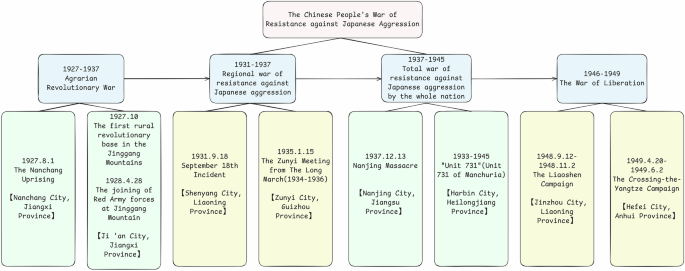
The aforementioned clusters clarify the progression of Chinese martial practices throughout history. Stage 1 (1921–1937) marks the establishment of the Chinese Communist Party, the Agrarian Revolutionary War, and the Anti-Japanese War. During this period, battlefield tourism is regarded as predominantly red attractions (NSC, JGS, and LM) rather than black attractions (918), indicative of early revolutionary activity. Stage 2 (1937–1945) signifies the period of the Anti-Japanese War. During this period, black attractions proliferated, such as the NJM and 731, which documented the atrocities of war; concurrently, LM, although occurring in the preceding phase, emerged as the command center of the Anti-Japanese War. Stage 3 (1945–1949) represents the period of the Liberation War. During this period, red attractions, including CYC, persisted in their growth, symbolizing the triumphant progression of the revolutionaries.
link




:max_bytes(150000):strip_icc()/120325-oprah-soc-860665f9054143eeb0dd846dc28fa740.jpg "Oprah-Approved Clothes, Shoes, and Bags Start at on Amazon")
