
Azerbaijan’s tourism revival blends investment vision and international engagement
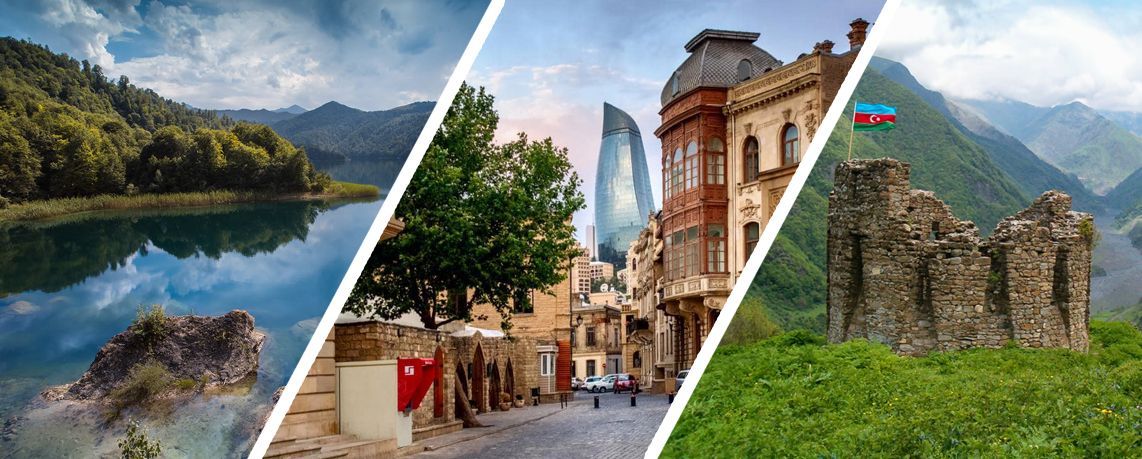
Azerbaijan is rapidly emerging as a key player in the European
tourism landscape, following a year of exceptional growth and
increasing international recognition. The country recorded a 25.9%
rise in inbound tourism in 2024—more than double the global
average—reflecting its rising appeal as a destination that blends
Eastern traditions with European connectivity.
These developments were at the heart of the 71st meeting of the
UNWTO European Regional Commission, held in Baku from 4 to 6 June
2025. The event brought together senior tourism policymakers and
international stakeholders, marking a major diplomatic and sectoral
milestone for Azerbaijan. During the session, the State Tourism
Agency officially presented Azerbaijan’s candidacy for the
Executive Council of the Commission for the 2025–2029 term,
reaffirming its commitment to shaping the regional tourism
agenda.

Fuad Nagiyev, Chairman of the State Tourism Agency, noted that
Azerbaijan has served on the Executive Council three times
previously, including as chair in 2017. “This year, we are putting
forward our candidacy again, and we look forward to continued
cooperation and fruitful joint efforts in the years ahead,” he
stated. Azerbaijan, a member of the Commission since 2001, is now
among nine countries vying for five open seats on the Executive
Council, alongside Kazakhstan, Uzbekistan, Greece, and others.
The Baku meeting followed a series of strategic engagements with
the UNWTO, including consultations held during FITUR 2025 in Madrid
and follow-up discussions at the UNWTO headquarters. The final
decision to convene the 71st session in Azerbaijan was made in
April during the Commission’s 70th meeting in Tirana, Albania.
Tourism as a national priority has gained new momentum in
Azerbaijan, driven by a combination of infrastructure upgrades,
international partnerships, and post-pandemic recovery strategies.
According to the State Tourism Agency, the sector contributed 4.5%
to national GDP in 2024, and a steady upward trend is expected to
continue into 2025.
One of the most notable achievements is the country’s
reintegration of newly liberated territories into its tourism
classification system—opening up new potential for cultural,
ecological, and historical tourism development. In Shusha, cultural
heritage restoration is being paired with the creation of new
hospitality infrastructure, while Lachin and Kalbajar are being
positioned for eco-tourism and adventure travel. Local governments,
in cooperation with the State Tourism Agency, are also working on
trail networks, guesthouse certification programs, and regional
festivals to promote these areas. The government has emphasized the
importance of ensuring that tourism development in these
territories is sustainable, inclusive, and respectful of the
region’s natural and historical character.
Azerbaijan has also expanded direct air routes, simplified
e-visa procedures, and enhanced its marketing campaigns,
particularly targeting the European market. These efforts are
complemented by growing cooperation with EU institutions and member
states. In recent years, Azerbaijan has signed or renewed tourism
cooperation agreements with countries such as Hungary, Bulgaria,
and Italy, focusing on mutual promotion, rural tourism, and joint
cultural itineraries. Participation in EU-supported programs such
as “Eastern Partnership Tourism” has further aligned Azerbaijan’s
policies with European standards, particularly in sustainable
tourism and digitalization.
The private sector has played a pivotal role in this resurgence.
International hotel brands—including Marriott, IHG, and Accor—have
announced plans to open new properties in Baku and regional hubs.
Meanwhile, domestic tourism startups and tour operators have begun
offering innovative experiences such as wine trails, culinary
tours, and digital nomad packages. The government has supported
this growth through public-private partnership initiatives,
including incentive schemes for SMEs and investment in tourism
zones like Shahdag and Tufandag.
Recognizing the importance of human capital, Azerbaijan has also
stepped up efforts in tourism education and workforce development.
Baku has become a center for hospitality training, with
institutions such as the Azerbaijan Tourism and Management
University (ATMU) partnering with international programs backed by
UNWTO. Plans are in motion to create regional training centers in
liberated territories to build local capacity, especially in
hospitality, tour guiding, and environmental management. The launch
of new certification programs and internships aims to create a new
generation of tourism professionals aligned with global
standards.
In 2024, the number of tourists from EU countries reached
112,300—an increase of nearly 35% compared to the previous year.
This rebound reflects Azerbaijan’s long-term strategic engagement
with European audiences, which saw a previous high point in 2019
with 3.2 million total arrivals and 224,000 from Europe alone.
The COVID-19 pandemic and regional instability had significantly
slowed tourism flows in subsequent years, but Azerbaijan has since
recovered more than 80% of pre-crisis levels. In total, 2.627
million foreign nationals and stateless persons from 196 countries
visited Azerbaijan last year, spending over $5.1 billion in the
country.
Recent figures from the first five months of 2025 further
support the country’s upward trajectory. Acting Head of the State
Tourism Agency’s Office, Kanan Guluzade, reported that 979,963
foreign tourists visited Azerbaijan between January and May. The
overall growth rate for this period was 1.5%, rising to 2% in
May—an early sign of a strong upcoming summer season.
Azerbaijan’s tourism diplomacy has also embraced global
sustainability efforts. During COP29, hosted in Baku, the country
played a pioneering role in bringing tourism onto the climate
agenda. The “COP29 Declaration on Strengthening Climate Action in
Tourism,” supported by over 70 countries, underscored Azerbaijan’s
leadership in aligning tourism growth with the Glasgow Declaration
on Climate Action.
UNWTO Executive Director Natalia Bayona, speaking in Baku,
praised Azerbaijan for its balanced approach to tradition,
innovation, and global cooperation. “Azerbaijan has shown itself to
be a reliable and effective partner, proudly preserving its
heritage while leading on major UN initiatives,” she said.
Looking ahead, Azerbaijan plans to deepen cooperation with
UNWTO, expand tourism education programs, and submit a formal
application under the “Best Tourism Village” initiative. As a
strategic bridge between Europe and the broader region, Azerbaijan
appears well-positioned to influence regional tourism policy while
maintaining its unique cultural identity.
link




:max_bytes(150000):strip_icc()/120325-oprah-soc-860665f9054143eeb0dd846dc28fa740.jpg "Oprah-Approved Clothes, Shoes, and Bags Start at on Amazon")
